
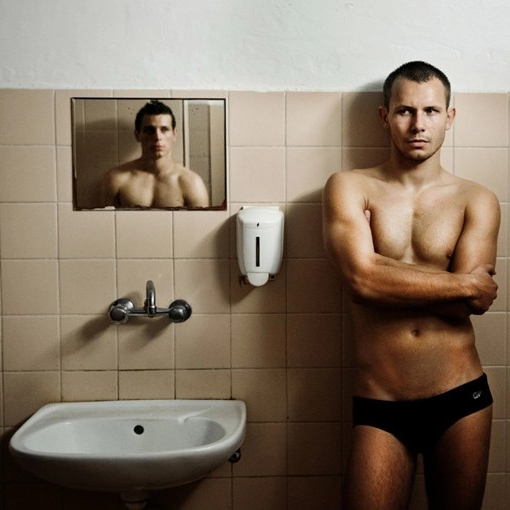
East European cinema has been a rich source of LGBTQ+ narratives and representations, reflecting the diverse and complex realities of queer people in the region. In this article, we explore some of the most remarkable LGBTQ+ films from different East European countries, spanning various genres, styles and themes.
BOSNIA AND HERCEGOVINA
Go West (2005) Director: Ahmed Imamović
In Sarajevo, Kenan, a Bosnian, and Milan, a Serb, who are in a gay relationship, make plans to relocate to the Netherlands due to its reputation as being gay-friendly. Unfortunately, their intentions are thwarted by the war, leaving them stranded in Serb-controlled territory. To conceal his identity as a circumcised Muslim, Kenan adopts female attire and persona. The couple seeks refuge in Milan’s village, where Kenan maintains the ruse by participating in a traditional wedding. Although the physical affection between the two men is limited on screen, Kenan, who identifies as bisexual, is depicted engaging in sexual activity on at least two occasions with Ranka, the village prostitute. Eventually, Ranka exposes the true nature of the men’s relationship with Milan’s father. Subsequently, Milan is conscripted into the Serbian army and tragically loses his life. Despite conveying a strong anti-Serb and anti-war stance, the film is criticized for its underlying misogyny. The only significant female character in the story is portrayed as the source of all conflicts, while Milan’s father and best friend demonstrate acceptance of his homosexual relationship with composure.
CROATIA
Fine mrtve djevojke (Fine Dead Girls) (2002) Director: Dalibor Matanić
In the film “Fine Dead Girls,” Iva and Marija take up residence in an apartment building inhabited by a diverse array of characters: a war veteran grappling with post-traumatic stress, a prostitute commissioned by a priest (who happens to be one of the girl’s father) to disrupt the couple, a prejudiced and stern apartment manager, and her son, a lazy individual who assaults one of the pair in an attempt to assert his masculinity. The movie directs its focus towards the harshness and ethical decay within contemporary Croatian society, addressing issues such as patriarchy, nationalism, the Catholic Church, and homophobia. Evidently, it resonated with audiences, emerging as the crowd favorite at the Pula festival in ’02 and securing Croatia’s nomination for an Oscar the following year.
The Constitution (2016) Director: Rajko Grlić
Four very different people live in the same building but avoid each other because of differences in how they live their lives, what they believe in, and where they come from. They would probably never exchange a word, but misfortune pushes them towards each other.
CZECH REPUBLIC
Not Angels, but Angels (1994) Director: Wiktor Grodecki
A documentary about boy prostitution in Prague. The economic boom and the recently won political freedom have turned that beautiful, graceful city into a new mecca for both Eastern and Western tourists in search of sex. Young men trying to live up to the standards of Western consumerism readily fall prey to quick, easy money from hustling.
The young hustlers’ disarming frankness and need to talk become the compelling engine that drives the film. They withhold nothing. Rather they speak of their lives in often gruesome and stripped-bare details, leaving us chilled by their short and fragile lives in grasp of the oldest trade on earth. (from the official blurb).
Body without Soul (1996) Director: Wiktor Grodecki
This film was billed as a sequel to Grodecki’s incredibly manipulative film about Prague rent boys, Not Angels but Angels (1994, available on video). In that film, we learn all about the tragic fate of the young boys who are forced to sell their bodies. Of course, few of them are really gay, and there are intercut shots of scary old Germans and Prague fountains with uplifting music. BODY WITHOUT SOUL is equally manipulative and uses the same loud Requiem. This time the focus is on how the boys are manipulated and apparently abused in the porn industry, also with the Germans cast as the devils behind it all. The head pornographer does autopsies for a living, which allows the director to cut between the pornographer cutting up flesh and directing the boys like pieces of meat. Really clever and gory. Often, when the director isn’t bashing you over the head with his point, the boys manage to say something of real interest, though.
Mandragora (1997) Director: Wiktor Grodecki
Prague calls out to the young boys, drawing them from their harsh circumstances towards the hope of a brighter future. With every train’s arrival, another innocent soul disembarks into a whirlwind, swiftly becoming entangled in the web of drugs and prostitution. In this enchanting yet unforgiving city, there is no shortage of predators hovering, observing, and biding their time for the vulnerable. Once more, director Wicktor Grodecki has crafted a raw and achingly real portrayal of the sex trade, which grips your heart and guides you through the harrowing existence these boys are compelled to endure.
The Glass Room (2019) Director: Julius Ševčík
The Glass Room is a love story about the relationship between two women set in an iconic modernist house in Czechoslovakia built by celebrity architect Ludwig Mies van der Rohe.
The Country Teacher (2008) Director: Bohdan Sláma
A gifted young teacher takes a job at a rural school and befriends a woman and her troubled 17-year-old son. When the teacher’s ex-boyfriend comes to visit the city, he quickly realizes that nobody in the village knows that the teacher is gay and harbours a secret affection for the teenage boy.
HUNGARY
ANOTHER WAY (Egymásra nézve) (1982) Director: Károly Makk
Based on a novel by Erzsébet Galgoczi this film depicts a romantic relationship between two female journalists in Hungary shortly after 1956. It is widely regarded as the most prominent and accomplished lesbian (or gay) film originating from Eastern Europe.
COLONEL REDL (Redl ezredes) Director: István Szabó
A compelling and intricate narrative, drawing inspiration from John Osborne’s A Patriot for Me and supported by historical evidence, unfolds the ambitious journey of a homosexual career soldier from an ordinary family background to a high military rank in the Austro-Hungarian Empire before World War I. This incisive portrayal delves into the complex politics of power, complemented by a remarkable performance by Brandauer. This work serves as the second instalment in a trilogy, following Mephisto and preceding Hanussen.
Nincsen nekem vágyam semmi HU (2000) Director: Kornél Mundruczó
Bruno is a young man residing in rural Hungary, leading a life with his girlfriend Mari while grappling with his closeted bisexuality. Also part of this dynamic is Mari’s brother, Ringo, who is openly homosexual. Unbeknownst to Mari, Bruno and Ringo engage in illicit activities such as prostitution and burglary to earn money while working together in the city.
ROMANIA
Legaturi Bolnavicioase (Love Sick) (2006) Director: Tudor Giurgiu
Based on the novel of the same name by Romanian author Cecilia Stefanescu, this narrative of personal growth signifies a pivotal moment for Romanian cinema as well. Prioritizing emotional and moral complexities over political themes, Love Sick adeptly addresses its contentious subject matter with finesse and tenderness.
Soldații. Poveste din Ferentari (Soldiers: Story from Ferentari) (2017) Director: Ivana Mladenovic
Adi (40), a shy and introverted anthropologist, who got recently dumped by his girlfriend, moves to Ferentari, the poorest and most notorious neighbourhood of Bucharest. He wants to write a study on manele music, the ‘pop music’ of the Roma community. Manele music serves as a way out of poverty for some successful musicians, but more often it’s just another opportunity for the mafia pimps to make money off their acts and keep them in slave-like dependency. While researching this subject, Adi meets Alberto, a Roma ex-convict and a bear of a man, who promises Adi to help him. Soon enough, the unlikely pair begins a playful romance in which Adi feeds Alberto with improbable plans of escaping poverty, while Alberto feeds Adi with phrases of love. Little by little, their casual affair grows into love. The funny and sweet teasing turns into something precarious since Alberto is both dangerous and fragile and belongs to a world whose codes Adi doesn’t understand.
Poppy Field (2020) Director: Eugen Jebeleanu
A young police officer, Cristi, tries to find the balance between two opposing parts of his identity: that of a man working in a macho hierarchical environment and that of a closeted gay person who tries to keep his personal life a secret.
SLOVAKIA
Hana a jej bratia (Hanna and Her Brothers) SK (2000) Director: Vladimír Adásek
Despite being surrounded by a large family and many friends, the eighteen-year-old Martin experiences a deep sense of loneliness. Amid complex relationships, he seeks a connection with someone who shares his unique perspective. Seeking solace in the apartment of his unconventional neighbour, Theodora, an amateur photographer, Martin navigates the responses to his personal ads. His journey leads him to “Hanna and Her Brothers,” a local cabaret where he is drawn to Hanna, a man harbouring a secret similar to Martin’s. Notably, “Hanna and Her Brothers” stands as one of the first Eastern European films to centre on gay characters. Through its musical interludes and diverse supporting cast, the film offers a message of optimism and resilience, portraying the pursuit of one’s authentic path in life.
SLOVENIA
Varuh Meje (Guardian of the frontier) SLO (2002) Director: Maja Weiss
Three young women’s summer canoe trip along the river Kolpa transforms into an unsettling experience upon their realization that the forested riverbanks not only mark the boundary between Slovenia and Croatia but also delineate the division between the permissible and the prohibited. It becomes apparent that the self-proclaimed Guardian of the Frontier is the enforcer of this demarcation.
SERBIA
MARBLE ASS (Dupe od mramora) (1995) Director: Zhelimir Zhilnik
The film depicting the lives of drag queens in Belgrade received a special Teddy prize at the Berlin Festival in 1995. The main characters are two transvestite prostitutes who exhibit remarkable resilience in comparison to their former boyfriend Johnny, whose return from the war disrupts their stability. It can be likened to a politically charged version of “Priscilla, Queen of the Desert.” The mature (37 years old) character known as Merlin (or Marylin, a blonde) imparts her knowledge to Sanela, who later enters a “marriage” with a bodybuilder, while Johnny meets an unfortunate fate. Furthermore, a poignant scene unfolds as Merlin attempts to instruct a “genuine” woman in the art of solicitation.
Diši duboko (Take a Deep Breath) (2004) Director: Dragan Marinković
The film “Take a Deep Breath” depicts the struggles of a younger generation in contemporary Serbia, often blaming their parents for the challenges they face. The story follows a middle-aged conservative judge striving to maintain patriarchal control over his family, while his wife engages in a secret affair with a younger man. Meanwhile, their daughter Sasha plans to leave the country with her boyfriend. However, when her boyfriend is hospitalized after a car accident, Sasha redirects her affections to his sister, who arrives from Paris to offer support. The film portrays an intimate and playful relationship between the two women, but the father ultimately uses his power to disrupt their connection. The ending of the film showcases three happy straight couples, leaving the fate of the lesbian affair uncertain. Furthermore, the film introduces suggestions of the father’s latent homosexuality, potentially stemming from childhood trauma in an orphanage. While advocating for tolerance towards lesbian love, the film also implies a link between homophobia and the father’s psychological struggles, attributing his issues to childhood molestation.
The Parade (2011) Director: Srdjan Dragojevic
A movie depicting the efforts in organizing a Pride parade in contemporary Serbia, focusing on the involvement of former gangsters as bodyguards, infused with dark humour and a thought-provoking exploration of serious societal issues.
ALBANIA
The Marriage (2007) Director: Blerta Zeqiri
Their wedding is in only two weeks, and Anita and Bekim are adding the final touches to their big day. But when Bekim’s secret gay ex-lover, Nol, returns from abroad unexpectedly, the situation becomes complicated, especially when Bekim realizes that Nol is still in love with him.
ESTONIA
Firebird (2021) Director: Peeter Rebane
Set in the 1970’s Soviet Air Force, a perilous romantic entanglement emerges involving Sergey, a troubled conscript, his close companion Luisa, a charismatic and ambitious secretary to the base Commander, and a bold young fighter pilot named Roman.
GEORGIA
And Then We Danced (2019) Director: Levan Akin
Merab, a dedicated dancer, has spent years training alongside his partner Mary with the goal of earning a place in the National Georgian Ensemble. However, the introduction of another male dancer, Irakli, ignites not only a fierce rivalry but also a romantic attraction, potentially leading Merab to jeopardize both his dance career and his personal relationships.
In Bloom (2013) Directors: Nana Ekvtimishvili, Simon Groß
Tbilisi, Georgia, 1992: The era of the Soviet Union has concluded, and a civil war is unfolding in the regions. Childhood is drawing to a close for Natia and Eka, two close thirteen-year-old friends, amidst the turbulence. Natia has garnered attention from boys, including Lado, who presents her with a revolver before his departure.
LITHUANIA
The Summer of Sangaile (2015) Director: Alante Kavaite
At the age of 17, Sangaile holds a deep fascination for stunt planes. During a summer aeronautical show, she encounters a girl of the same age, Auste. In a moment of vulnerability, Sangaile confides her most intimate secret to Auste, who becomes the sole source of encouragement in Sangaile’s pursuit of flight.
You Can’t Escape Lithuania (2016) Director: Romas Zabarauskas
After his star actress, Indre, tragically commits matricide, the affluent young filmmaker Romas endeavours to facilitate her escape from Lithuania. Reluctantly assisted by his partner, the enigmatic Carlos from Mexico, they embark on a journey fraught with danger and uncertainty. In a spontaneous twist of fate, Romas seizes the opportunity to capture their tumultuous odyssey on film, blurring the lines between reality and fiction. As their intertwined secrets, poignant memories, and raw emotions come to the fore, the resulting narrative proves to be more captivating and unpredictable than any film Romas could have envisioned.
POLAND
In the Name Of (2013) Malgorzata Szumowska
Running toward God but away from his sexuality, Adam became a priest at age 21. Now the head of a rural parish, he’s still tormented by desire. When Father Adam attempts to help a troubled teen, long-suppressed feelings begin to surface.
Floating Skyscrapers (2013) Director: Tomasz Wasilewski
Kuba attends an art opening with his girlfriend of two years and bumps into Mikal. The connection between these two young men is instantaneous and intoxicating, and despite opposition from all sides, he allows Mikal into his life. The results go beyond anything he could have imagined.
RUSSIA
Winter Journey (2013) Directors: Sergey Taramaev, Lyubov Lvova
During a bus ride, Eric meets Lyokha, a 23-year-old provincial guy who attracts Eric’s attention by his eccentric, aggressive and valiant behaviour, caused, as Eric finds out later, by his desperation due to his fatal sickness. Two opposites collide and are attracted to each other.
While not specifically about Eastern Europe, it is noteworthy due to its similar political context:
GDR
Westler: East of the Wall (1985) Director: Wieland Speck
A West Berlin boy falls in love with an East Berlin boy on a day trip. The border guards start getting suspicious when the West Berliner starts making frequent trips, and the boys plan an escape from the East Berliner
Coming Out (1989) Director: Heiner Carow
The earliest East German film to openly address homosexual themes features Philipp, a discreet teacher who maintains a relationship with a female coworker to preserve a facade. One fateful night, he unintentionally enters a gay bar and encounters a young man with whom he swiftly develops a profound affection. This newfound love empowers him to confront his true identity without fear.
 Refugiu de Creație
Leave a comment